Therapeutic proteins

Gyrolab platform supports therapeutic protein development 

Therapeutic proteins are a major class of medicines, including monoclonal antibodies and other biologics used to treat cancer, metabolic disorders, and immune-related diseases. Their ability to target specific cells or biological pathways helps improve treatment precision and reduce unwanted side effects.

Developing these molecules comes with analytical challenges. Recombinant production introduces potential impurities such as host cell proteins (HCP), residual DNA, and Protein A. These must be monitored throughout development and manufacturing to ensure product quality and patient safety.

Gyrolab supports protein therapeutic workflows with automated immunoassays that help you detect impurities, characterize molecules, and generate reliable data across development and quality control. 

Therapeutic proteins

Common classes of therapeutic proteins include:

  • Monoclonal antibodies (mAbs) –  High specificity molecules that can target diseased cells or tissues. Often used alone or as part of antibody-drug conjugates (ADCs).  
  • Enzymes –  Used in replacement therapies for metabolic diseases such as phenylketonuria (PKU) and lactose intolerance, as well as in oncology and cardiovascular treatments.  
  • Hormones and cytokines –  Regulate cell signaling and biological responses, for example insulin and growth factors.  
  • Coagulation factors –  Used to treat bleeding disorders such as hemophilia. 

How Gyrolab supports therapeutic protein development

Gyrolab provides immunoassay support across the full development workflow - from early cell line selection to large-scale manufacturing and quality control.  

Cell line development

Select high-performing clones based on productivity and impurity profiles. A wide dynamic range and high throughput allow you to screen more candidates with fewer assay adjustments. 

Purification and processing

Detect host cell proteins (HCP), nucleic acids, and chromatography contaminants such as Protein A across varying sample types. High matrix tolerance helps maintain data quality even in complex samples.  

Quality control

Monitor impurities and confirm product consistency in manufactured batches. Automated workflows support reproducible results aligned with regulatory expectations.  

Why therapeutic protein teams use Gyrolab

    • High sensitivity and wide dynamic range
      Quantify low-abundance analytes and detect subtle differences without repeated dilution steps.  
    • Consistent, reproducible data
       Automated assay execution reduces variability between runs, users, and sites — supporting comparability studies.
    • Strong matrix tolerance
       Flow-through technology reduces background interference in complex matrices such as serum or tissue homogenates.  

    • Low sample and reagent consumption
      Nanoliter-scale assays reduce the amount of valuable material required, especially when samples are limited.  
    • Support for binding and potency studies
      Evaluate target binding, receptor interactions, and anti-drug antibody (ADA) responses in one platform.  
    •  Scalable workflows across development stages
       Standardized methods support transfer between teams and sites, from early development to QC and post-approval work.  

Kits for impurity testing and analysis

Explore ready-to-use solutions for common impurity analysis:

Gyrolab vs ELISA for biologics analysis

Time to results

Time to results

Results in just over an hour, compared to several hours or overnight with ELISA.

Hands-on time

Hands-on time

Automated processing reduces manual pipetting and intervention.

Dynamic range

Dynamic range

Fewer dilutions are needed to bring samples into range.

Matrix tolerance

Matrix tolerance

The flow-through format reduces background in complex matrices such as serum.

Sample volume

Sample volume

Nanoliter-scale assays require significantly smaller sample volumes than plate-based methods.

Throughput and runs required

Throughput and runs required

Higher pass rates and faster runtimes reduce repeat burden keeping your project timelines on track.

Case study 

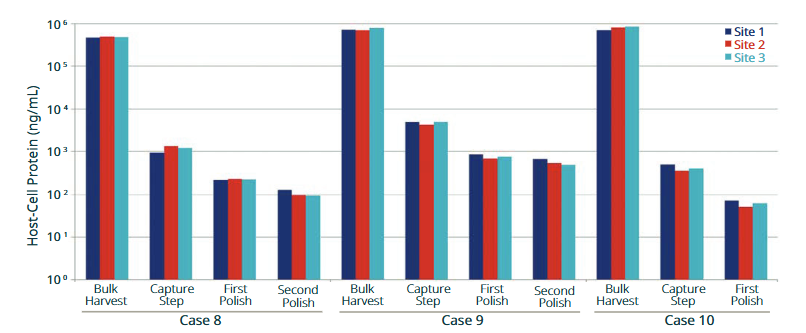
Operator-independent assay transfer across biologics development sites

Therapeutic proteins from a global development pipeline, including antibodies and multispecifics, were analyzed for host cell protein content using Gyrolab.

The results matched ELISA in sensitivity and concentration levels, while improving throughput and reducing hands-on time. Automated, standardized workflows enabled reliable transfer of assays between global sites without operator-dependent variation.

HCP cross-site testing using the Gyrolab platform. Petrovic et al 2019, printed with permission

HCP cross-site testing using the Gyrolab platform. Petrovic et al 2019, printed with permission

Case study 

Increased analytical productivity in biologics development  

A CDMO developed a custom HCP assay on the Gyrolab platform for an internal expression system. The assay provided a broader working range and required less sample and reagent volume. Automated execution reduced manual effort, resulting in approximately 50–70% fewer man-days compared to the existing ELISA workflow.

Further reading

Validation and data confidence

Gyrolab is used in regulated bioanalytical environments where reproducibility, traceability, and data integrity are essential. Automated workflows reduce operator-dependent variation, while software support provides audit trails, controlled access, and structured data handling.

 Assays can be transferred between systems and sites with consistent results, supporting long-term studies and regulatory submissions without added complexity.  

Scientist woman

Ready to improve your immunoassay workflow?

Looking to reduce assay time and improve consistency in your biologics workflows?

Talk to a Gyrolab specialist to explore how automated immunoassays can support your development, impurity testing, and quality control needs.