Antibody Therapeutics

Gyrolab delivers precise and reproducible immunoassays for biologics development 

Monoclonal antibodies (mAbs) are a major class of therapeutic proteins, used across oncology, immunology, and rare diseases. Their ability to bind specific targets enables precise treatment while helping reduce off-target effects.

As antibody formats evolve, analytical requirements increase. From early development to manufacturing, you need reliable methods to monitor product quality, detect impurities, and ensure consistent performance.

Gyrolab supports antibody workflows with automated immunoassays that help you generate reproducible data across development, process optimization, and quality control.

Antibody therapeutics

Common antibody-based modalities include:

  • Monoclonal antibodies (mAbs)
    Highly specific molecules designed to bind a single target with precision.
  • Antibody–drug conjugates (ADC) 
    Combine antibody targeting with small molecule or oligonucleotide payloads for controlled delivery.
  • Bispecific and multispecific antibodies
    Engineered to bind two or more targets simultaneously, enabling more complex therapeutic mechanisms.

How Gyrolab supports antibody development 

Gyrolab provides immunoassay support across the full antibody lifecycle — from cell line development to manufacturing and quality control.

High reproducibility

Consistent, reproducible data
Automated workflows reduce variability between runs, users, and sites - supporting comparability and transfer.


Versatility-1

Strong matrix tolerance
Flow-through format reduces interference in complex samples such as serum and cell culture media.

sample 100

Low sample and reagent consumption 
Nanoliter-scale assays reduce the need for valuable samples and costly reagents. 

Speed-1

Support for binding and immunogenicity studies
Evaluate target binding, receptor interactions, and anti-drug antibody (ADA) responses in one platform. 

5

Scalable workflows
Standardized methods support transfer from early development to QC and across global sites.


Gyrolab vs ELISA for biologics analysis  

Time to results

Time to results

Results in just over an hour, compared to several hours or overnight with ELISA.

Hands-on time

Hands-on time

Automated processing reduces manual pipetting and intervention.

Dynamic range

Dynamic range

Fewer dilutions are needed to bring samples into range.

Matrix tolerance

Matrix tolerance

The flow-through format reduces background in complex matrices such as serum.

Sample volume

Sample volume

Nanoliter-scale assays require significantly smaller sample volumes than plate-based methods.

Throughput and runs required

Throughput and runs required

Higher pass rates and faster runtimes reduce repeat burden keeping your project timelines on track.

Case study

Operator-independent assay transfer across biologics development sites

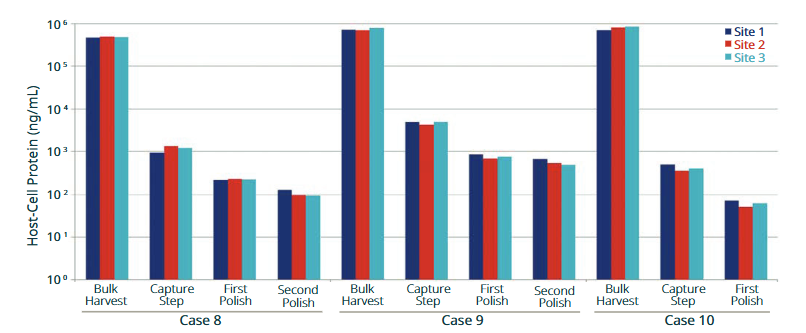
Therapeutic proteins, including antibodies and multispecifics, were analyzed for host cell protein content using Gyrolab.

Results matched ELISA in sensitivity and concentration levels, while improving throughput and reducing hands-on time. Automated workflows enabled consistent assay transfer between global development sites without operator-dependent variation.


HCP cross-site testing using the Gyrolab platform. Petrovic et al 2019, printed with permission

HCP cross-site testing using the Gyrolab platform. Petrovic et al 2019, printed with permission

Case study

Increased analytical productivity in biologics development

A CDMO developed a custom HCP assay using the Gyrolab platform for an internal expression system.

The assay provided a broader working range and required less sample and reagent volume. Automated execution reduced manual effort, resulting in approximately 50–70% fewer man-days compared to an existing ELISA workflow.

What webinar https://s3m.io/MWNrY?

Further reading

Validation and data confidence

Gyrolab is used in bioanalytical environments where data integrity, traceability, and reproducibility are critical. Automated workflows reduce operator-dependent variation, while software support provides audit trails, controlled access, and structured data handling aligned with GLP/GMP expectations.

Assays can be transferred between systems and sites with consistent results, supporting long-term studies and regulatory submissions without added complexity.


ask an expert

Ready to improve your immunoassay workflow?

Looking to reduce assay time and improve consistency in your antibody workflows?

Talk to a Gyrolab specialist to explore how automated immunoassays can support your development, impurity testing, and quality control needs.